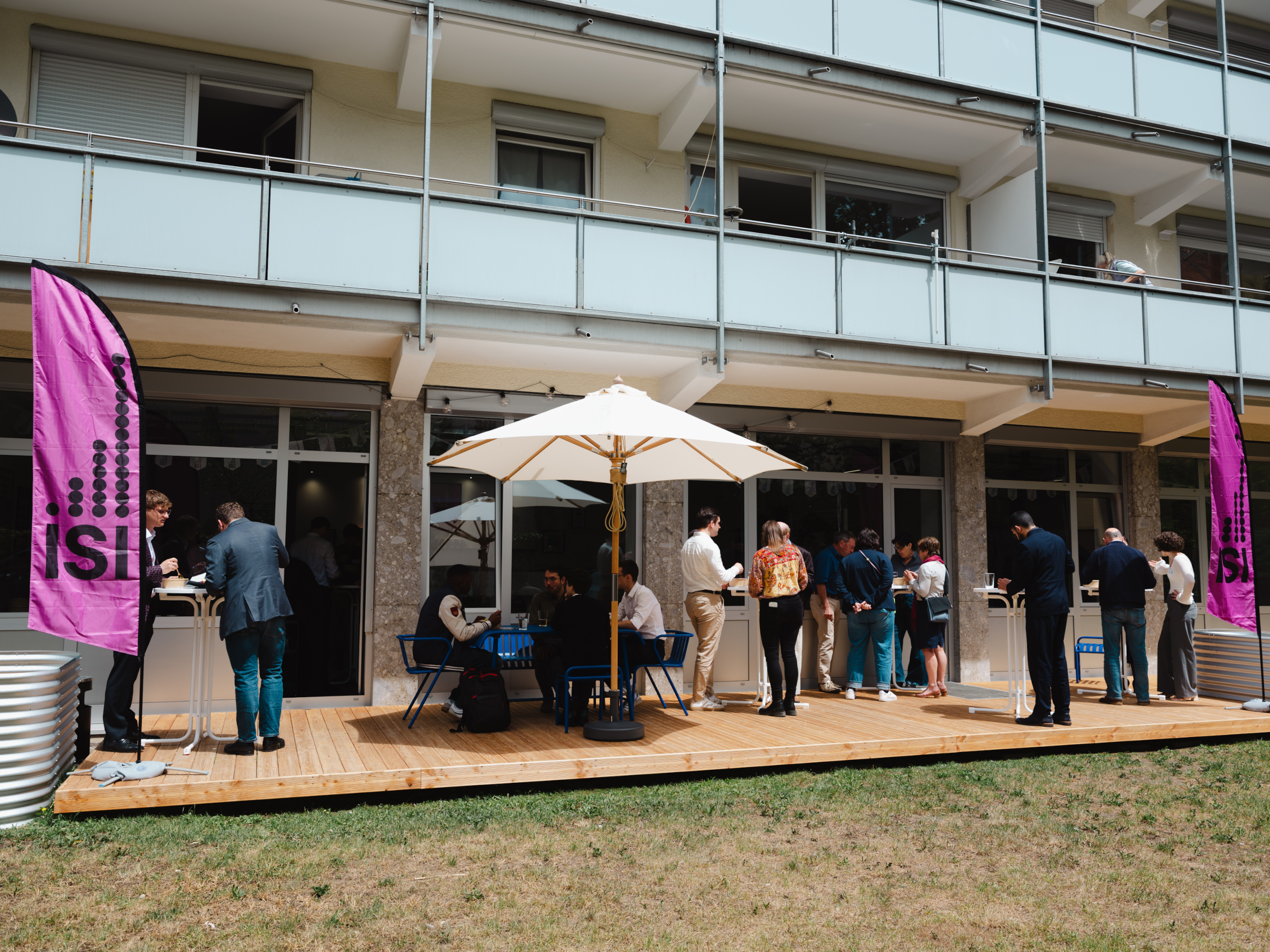
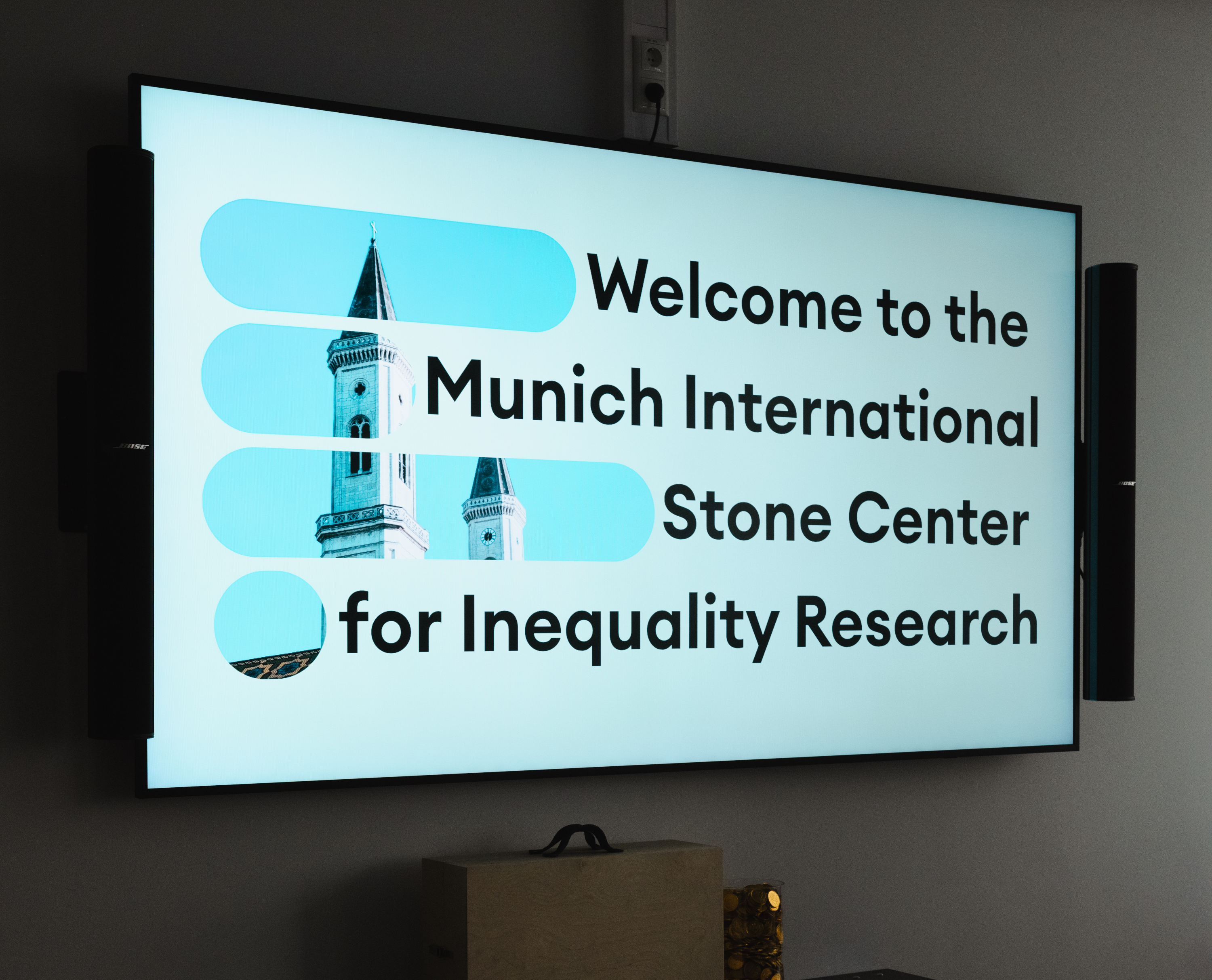
Welcome to the nearly finished research center
The visit from Cathleen and James Stone brought unexpected talents to light at the ISI: people who usually research wealth inequality were suddenly discussing wall plugs, spirit levels, and cable ducts. Fortunately, by the day of the opening, the focus had shifted from power drills back to research.

What you don't see in the following photos: just an hour before the first guests arrive, there is a hammer lying in the hallway. An Allen key is missing somewhere. Outside the entrance, the ISI sign, installed only days earlier, is being polished one last time. Inside, a houseplant is given a place of honor, while outside, three people debate whether the ribbon for the inauguration should really be hanging exactly there.
The past eight weeks were arguably the most hands-on period in the history of the ISI. People who usually research wealth distribution, social mobility, or tax policy suddenly developed surprisingly well-founded opinions on wall plugs, cable ducts, and the structural integrity of Billy bookcases. Anyone who knew how to operate a cordless drill became a sought-after expert overnight. Those who didn't at least held the spirit level.
And yet, we thought we had already put all that behind us. After months of renovation, the new offices at Ohmstraße 8 were finally ready for move-in. Now, in just eight weeks, they had to become what a research center needs more than just freshly painted walls: a place for working, debating, and thinking. Desks were assembled, books were shelved, monitors were wired, and coffee machines were tested. Multiple times.
The date was set. Cathleen and James Stone, whose generous support made the founding of the Munich International Stone Center for Inequality Research possible in the first place, had announced their visit for June 5th. Together with Sonja Plesset, Executive Director of the Stone Foundation, they traveled from the U.S. to officially inaugurate the new premises. When the people to whom you owe this center come to visit, you don't really want to have to explain why the conference table is still lying in pieces in the hallway.
On the morning of June 5th, the scent of fresh paint still drifts through the hallways. Added to that are coffee, butter pretzels, sandwiches, and an astonishing number of cinnamon rolls. Slowly, the lounge area fills with guests, colleagues, and companions of the ISI. The construction-site atmosphere of the past few weeks gradually gives way to an opening ceremony.
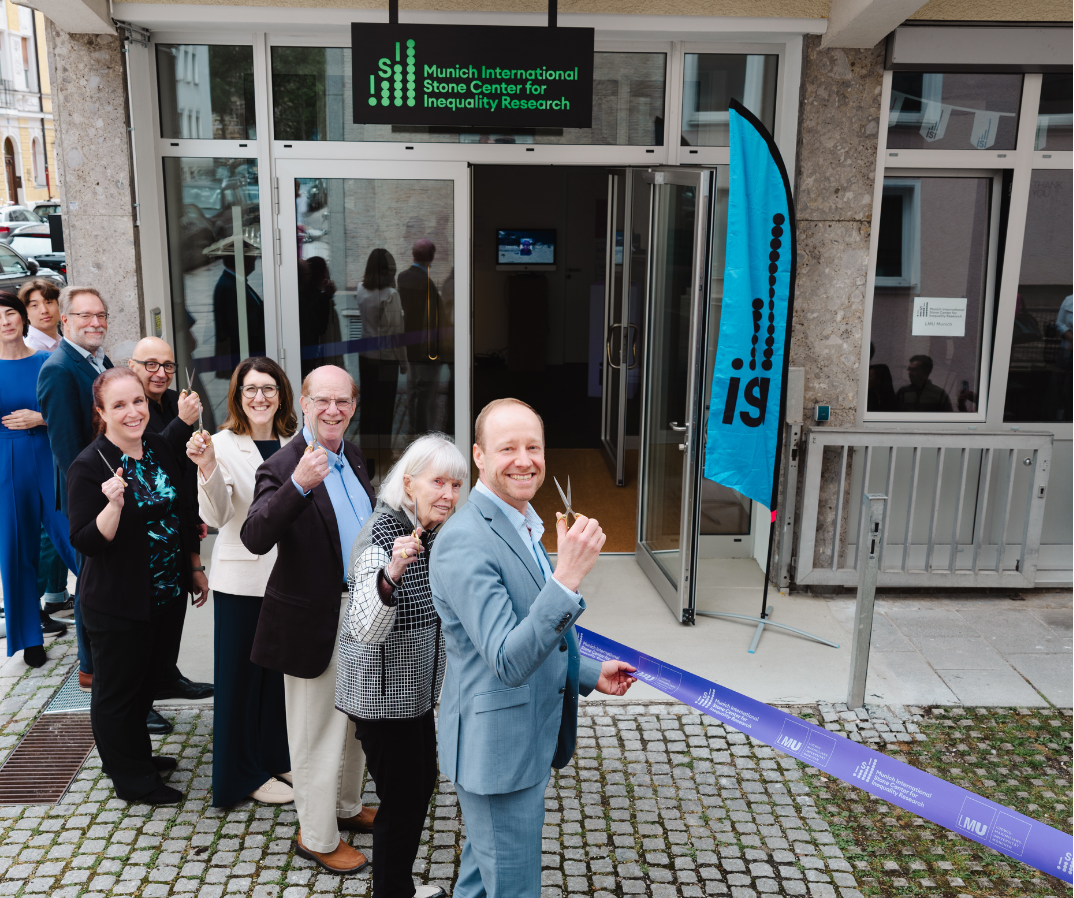
Finally, in front of the entrance, comes the moment everyone has been working toward. Together with the ISI founding team – Prof. Dr. Fabian Pfeffer, Dr. Arielle Helmick, and Michèle Loetzner – as well as Prof. Dr. Armin Nassehi and Dr. Christoph Mülke representing LMU, Cathleen and James Stone and Sonja Plesset cut the inauguration ribbon. It is a symbolic act, but one with significance: it marks not just the opening of new offices, but the launch of a place where inequality will be researched from a wide variety of scientific perspectives in the future.
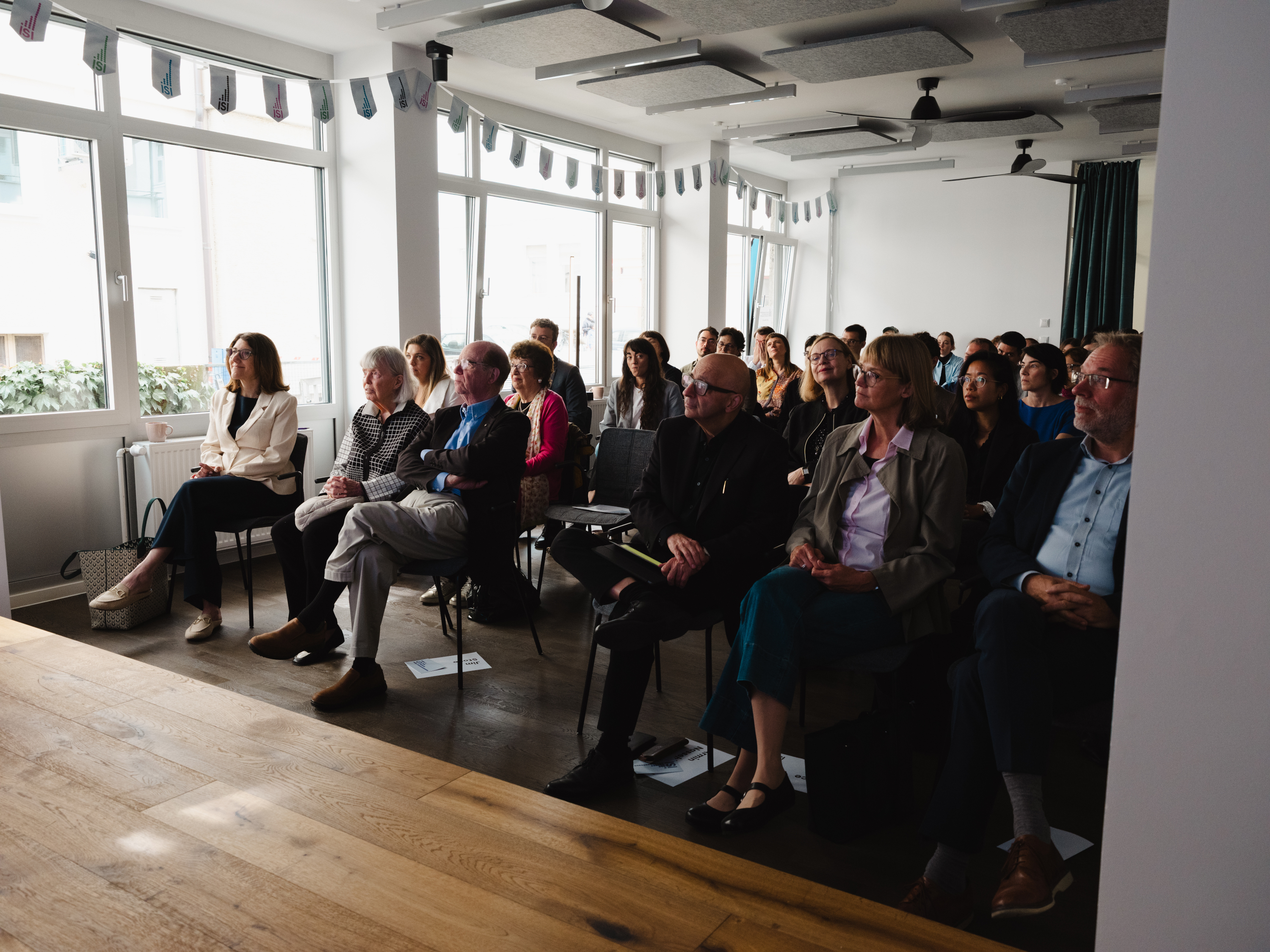
The program that follows demonstrates that interdisciplinarity at the ISI is no mere buzzword. Fabian Pfeffer opens with a visualization of wealth distribution in Germany, impressively illustrating why a center like this is needed. Afterward, Dr. Jakob Miethe, Dr. Nhat An Trinh, Clara Löffler, Prof. Dr. Laura Seelkopf, and Ph.D. Franziska Disselbacher provide insights into their research, showing the diversity of questions gathered under the common roof of inequality research.
James Stone also addresses the guests, emphasizing the importance of spaces where different disciplines can think together about societal challenges.
After so much food for thought, the lunch buffet comes at just the right time. On the terrace, conversations spark between researchers, guests, and supporters. New ideas are sketched out, contacts are made, and plans are forged. There are many ways to spend a Friday after Corpus Christi. At the lake. In the mountains. In traffic heading south. Or at the opening of a research center for inequality. The fact that so many people chose the latter was perhaps the best gift of the day for us. Thank you to everyone who celebrated and debated with us and filled these new rooms with life.